
Consortium of Lichen Herbaria
- building a Global Consortium of Bryophytes and Lichens as keystones of cryptobiotic communities -
- Home
- Search
- Images
- Species Checklists
- US States: O-Z >
- US National Parks
- Central America
- South America
- US National Parks
- Southern Subpolar Region
|
Parmotrema gardneri (Dodge) Serus.
 |
|
|
Family: Parmeliaceae
[Parmelia gardneri C.W. Dodge]  Gary Perlmutter |
Nash, T.H., Ryan, B.D., Gries, C., Bungartz, F., (eds.) 2002. Lichen Flora of the Greater Sonoran Desert Region. Vol 1. Thallus: foliose, adnate to loosely adnate, 3-10 cm in diam., lobate lobes: subirregular, elongate, slightly imbricate, plane, separate, 8-15 mm wide; apices: rotund, subascending, eciliate or short cilia developing in the axils of the lobes upper surface: gray with some blackened areas, smooth, usually shiny, emaculate, reticulately cracked with age soredia: granular, common, in linear to subcapitate, marginal soralia that sometimes develop on marginal lacinae; isidia and pustulae: absent medulla: white with continuous algal layer lower surface: black with brown naked zone peripherally, centrally rhizinate; rhizines: scattered, simple Apothecia: rare, substipitate, up to 5 mm in diam.; margin: sparsely sorediate; disc: brown, imperforate ascospores: ellipsoid, 18-22 x 8-10 µm Pycnidia: rare, punctiform, conidia: sublageniform, 6-7 x 1 µm Spot tests: upper cortex K+ yellow, C-, KC-, P-; medulla K-, C-, KC-, P+ red Secondary metabolites: upper cortex with atranorin and chloroatranorin; medulla with protocetraric acid (major), unknown fatty acid (major, minor or ± trace). Substrate and ecology: usually on trees in open habitats World distribution: pantropical Sonoran distribution: southern lowlands of Sonora, Baja California del Sur. |
 Lynda Miller  Stephen Sharnoff 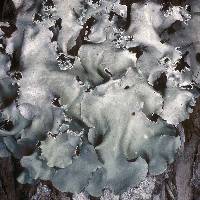 Stephen Sharnoff  Stephen Sharnoff  Stephen Sharnoff 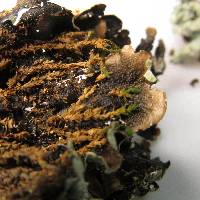 Sheila Strawn  Sheila Strawn 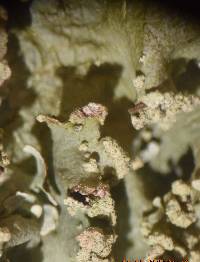 Sheila Strawn  Sheila Strawn  Sheila Strawn  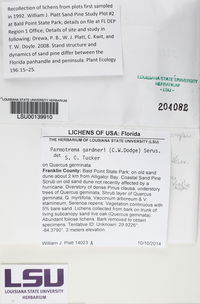   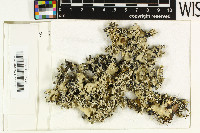 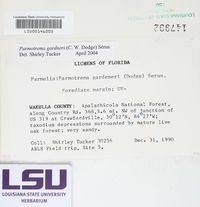   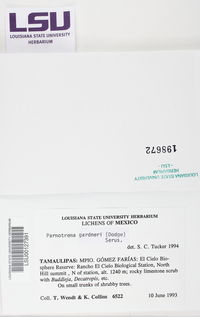          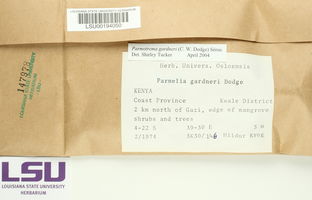 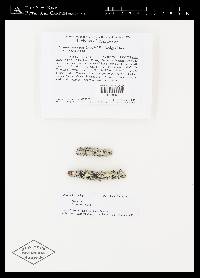 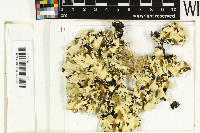   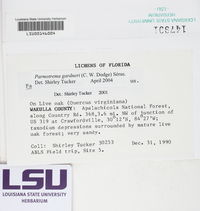 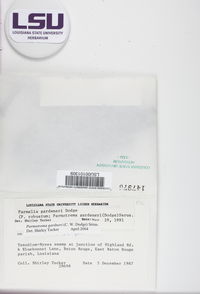 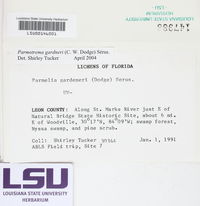  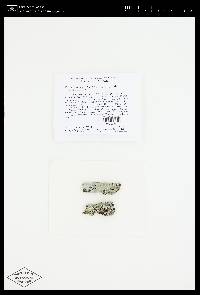  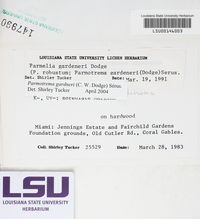   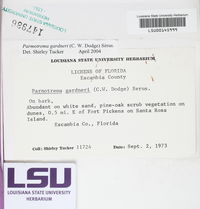 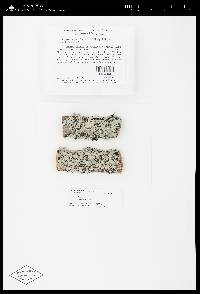 The New York Botanical Garden  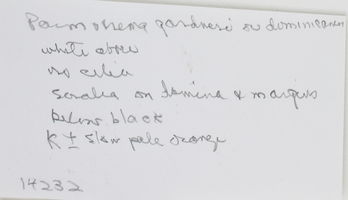 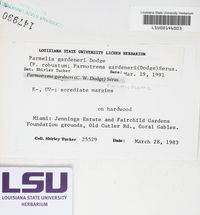     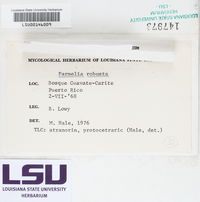     The New York Botanical Garden  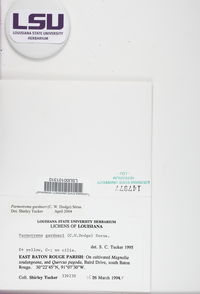    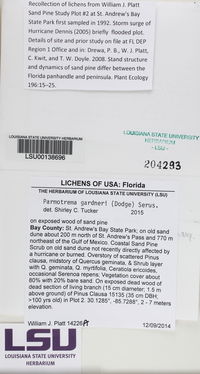 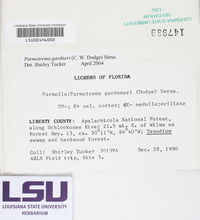     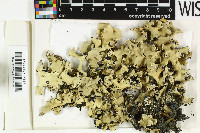   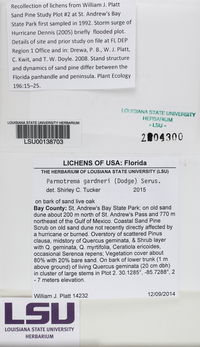 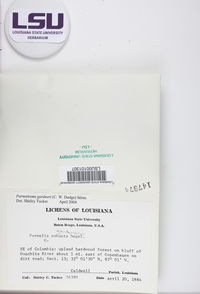 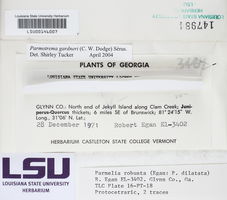     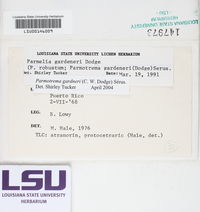 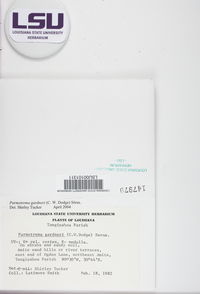  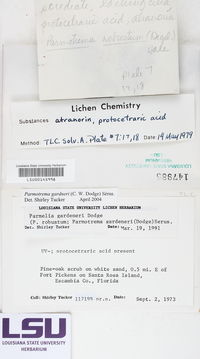  The New York Botanical Garden 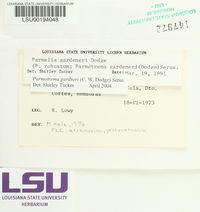 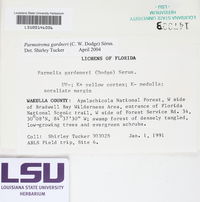    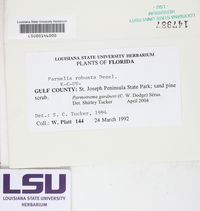 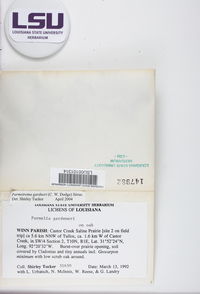  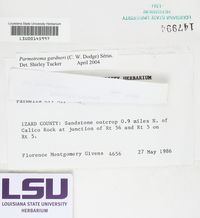  The New York Botanical Garden  |
|


Powered by Symbiota