
Consortium of Lichen Herbaria
- building a Global Consortium of Bryophytes and Lichens as keystones of cryptobiotic communities -
- Home
- Search
- Images
- Species Checklists
- US States: O-Z >
- US National Parks
- Central America
- South America
- US National Parks
- Southern Subpolar Region
|
Cladonia uncialis (L.) Weber ex F.H. Wigg.
 |
|
|
Family: Cladoniaceae
Thorn Cladonia
[Baeomyces uncialis (L.) Ach., moreCenomyce uncialis (L.) Ach., Cenomyce uncialis var. pseudoparecha Delise, Cenomyce uncialis var. uncialis (L.) Ach., Cladina uncialis (L.) Nyl., Cladonia biuncialis Hoffm., Cladonia pseudostellata Asahina, Cladonia stellata f. uncialis (L.) Rabenh., Cladonia uncialis f. biuncialis (Hoffm.) Schaer., Cladonia uncialis f. uncialis (L.) Weber ex F.H. Wigg., Cladonia uncialis subsp. biuncialis (Hoffm.) M. Choisy, Cladonia uncialis subsp. dicraea (Ach.) D. Hawksw., Cladonia uncialis subsp. uncialis (L.) Weber ex F.H. Wigg., Cladonia uncialis var. pseudoparecha (Delise) M. Choisy, Cladonia uncialis var. uncialis (L.) Weber ex F.H. Wigg., Lichen uncialis L.]  Stephen Sharnoff |
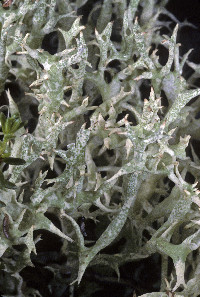
Ecology: Terricolous; growing sun-exposed; substrate non-calciferous (mainly on low elevation bluffs and outcrops). Thallus: Branches densely aggregated or caespitose. Primary Thallus: Evanescent. Secondary Thallus: Present, of indeterminate growth; stipe 20-60 mm high, .7-4 mm wide, lime green (pale greenish yellow (104) or greenish white (153) with patches of pale yellow-green (121-119) or light yellow-green (134), often with irregular clear areas ("windows")), homogeneously coloured, mottled, or tainted brown, corticate. Upper Surface: Smooth. Reproduction Strategy: Only known as sterile, asexually reproducing form. Conidiomata: Formed on podetia. Secondary Metabolites: Squamatic acid and usnic acid, of the following substance class(es): ß-orcinol depsides. Spot Tests: Upper surface: K (negative), C , + deep yellow, or + orange, PD . UV-Fluorescence: Reaction colour: bright bluish white (especially where podetia are broken). Thompson, J., 1984. American Arctic Lichens: The Macrolichens. Primary thallus not known. Podetia in tufts or mats, 30-60 mm tall, 1-4 mm diameter, cupless; sympodially branched with the upper branches whorled, the branchlets short, dichotomous or in whorls, spinescent, the axils usually perforate; surface smooth, straw-colored to yellowish, inner cartilaginous layer continuous, 40-50 μ thick, the outer cortex 30-60 μ thick. Apothecia not known. Reactions: K— , C— , KC+ yellowish, P-. Contents: usnic and hypothamnolic acids. This species grows on soils rich in humus. It appears to prefer open stands of spruce. It is an amphi-Beringian species known from Japan and Alaska. |
 Stephen Sharnoff  Stephen Sharnoff  Stephen Sharnoff  Stephen Sharnoff  Stephen Sharnoff  Stephen Sharnoff  Stephen Sharnoff 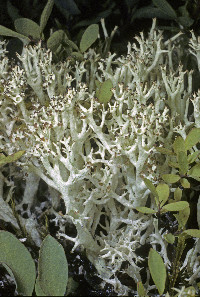 Stephen Sharnoff  Stephen Sharnoff  Stephen Sharnoff  Stephen Sharnoff  Stephen Sharnoff  Stephen Sharnoff 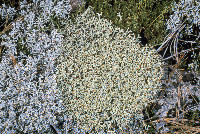 Stephen Sharnoff  Stephen Sharnoff  Lucy Taylor                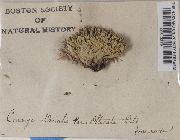                 Andrew Khitsun  Andrew Khitsun  Andrew Khitsun 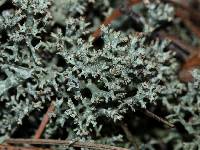 Andrew Khitsun  Andrew Khitsun  Gary Perlmutter  Gary Perlmutter  Gary Perlmutter  Gary Perlmutter  Gary Perlmutter  Gary Perlmutter  Gary Perlmutter  Gary Perlmutter 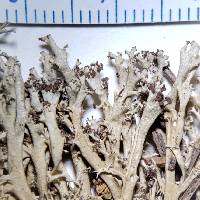 Gary Perlmutter  Gary Perlmutter 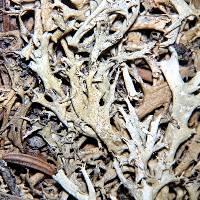 Gary Perlmutter  Gary Perlmutter  Gary Perlmutter  Gary Perlmutter  Gary Perlmutter  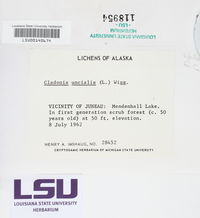   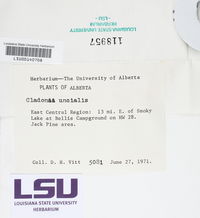   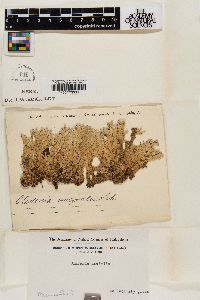      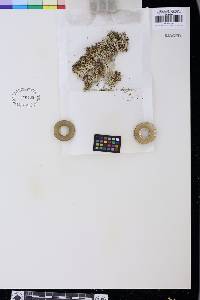   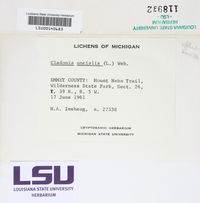    Christopher Raithel  |
|


Powered by Symbiota