
Consortium of Lichen Herbaria
- building a Global Consortium of Bryophytes and Lichens as keystones of cryptobiotic communities -
- Home
- Search
- Images
- Species Checklists
- US States: O-Z >
- US National Parks
- Central America
- South America
- US National Parks
- Southern Subpolar Region
|
Gowardia nigricans (Ach.) P. Halonen, L. Myllys, S. Velmala, & H. Hyvarinen
 (redirected from: Alectoria nigricans (Ach.) Nyl.) (redirected from: Alectoria nigricans (Ach.) Nyl.) |
|
|
Family: Parmeliaceae
[Alectoria boryana Delise, moreAlectoria nigricans (Ach.) Nyl., Alectoria nigricans f. goemerensis Gyeln., Alectoria nigricans f. nigricans (Ach.) Nyl., Alectoria nigricans f. subchalybeiformis Räsänen, Alectoria nigricans var. nigricans (Ach.) Nyl., Alectoria nigricans var. thulensis (Th. Fr.) Vain., Alectoria thulensis Th. Fr., Bryopogon nigricans (Ach.) Gyeln., Bryopogon nigricans f. goemerensis (Gyeln.) Gyeln., Bryopogon nigricans f. nigricans (Ach.) Gyeln., Bryopogon nigricans f. thulensis (Th. Fr.) Gyeln., Cornicularia ochroleuca var. nigricans Ach.]  Stephen Sharnoff |
Life habit: lichenized (mutualistic with algal photobionts) thallus: fruticose (fruticous), shrub-like, beard-like [th] upper surface: grey(ish) | yellow(ish) (if dull: buff) | brown(ish) (if pale: fawn, tan; if mid: cinnamon) | grey(ish) black | white(ish) brown (beige) [th marginal and upper surface] specific structures: absent [th] morphol substructures (eg areoles, lobes, branches) width [mm]: (low) 1.0 (high) 1.5 [th] morphol substructures (eg areoles, lobes, branches) upper surface: pseudocyphellate, with pseudocyphellae ascomata: absent | present ascoma: apothecial, apothecioid hymenial ascoma [mm]: (low) 1.5 (high) 4.0 [ascm] paraphyses/-oids: present asci: lecanoralean [asc] tholus: thickened [asc] tholus amyloidity (iodine reaction): present [asc] tholus amyloidity pattern: amyloid with widening axial body towards the apex (= Lecanora-, Parmelia-, Rinodina-types etc) ascospores: (median) 8.0 [asp] length [µm]: (low) 30.0 (high) 41.0 [asp] width [µm]: (low) 20.0 (high) 23.0 [asp] septa: absent spore lumen unilocular, monolocular [asp] pigmentation: hyaline, colourless [asp] perispore, epispore: not apparent secondary metabolites: present secondary metabolites: alectorialic acid | barbatolic acid primary photobiont: present secondary photobionts (eg in cephalodia): absent primary photobiont: chlorophytaceous trebouxiaceous, chlorococcoid. substrate: soil, clay, humus, turf, detritus, dead leaves | bark, cork, plant surface trunks, branches, twigs | rock, stones, pebbles unspecified. |
 Troy McMullin  Troy McMullin  Stephen Sharnoff 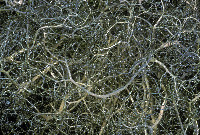 Stephen Sharnoff 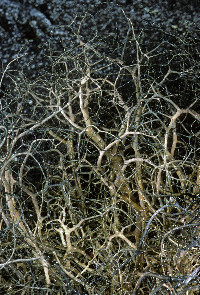 Stephen Sharnoff   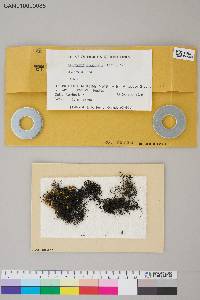   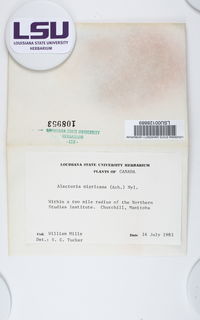            The New York Botanical Garden  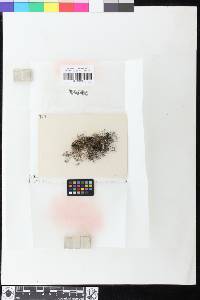                            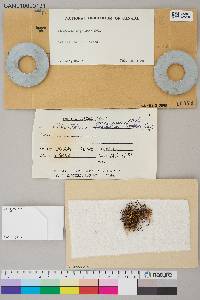      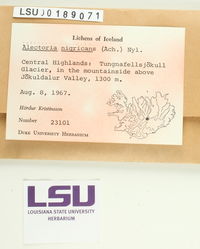      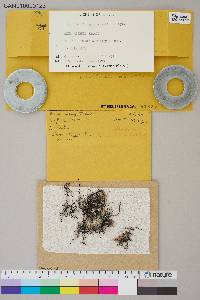  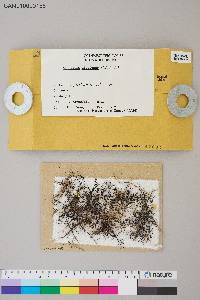            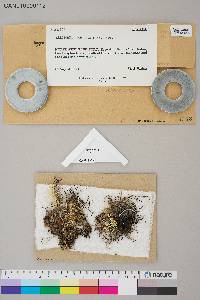          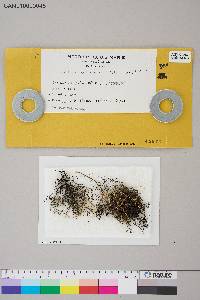      |
|


Powered by Symbiota